The Illusion of Safety: Why Your Exit Strategy is Actually a Target
Most retail traders enter the crypto market with a dangerous misconception. They calculate their leverage, set a conservative entry order, and believe that as long as they have a Stop Loss in place, their account is bulletproof.
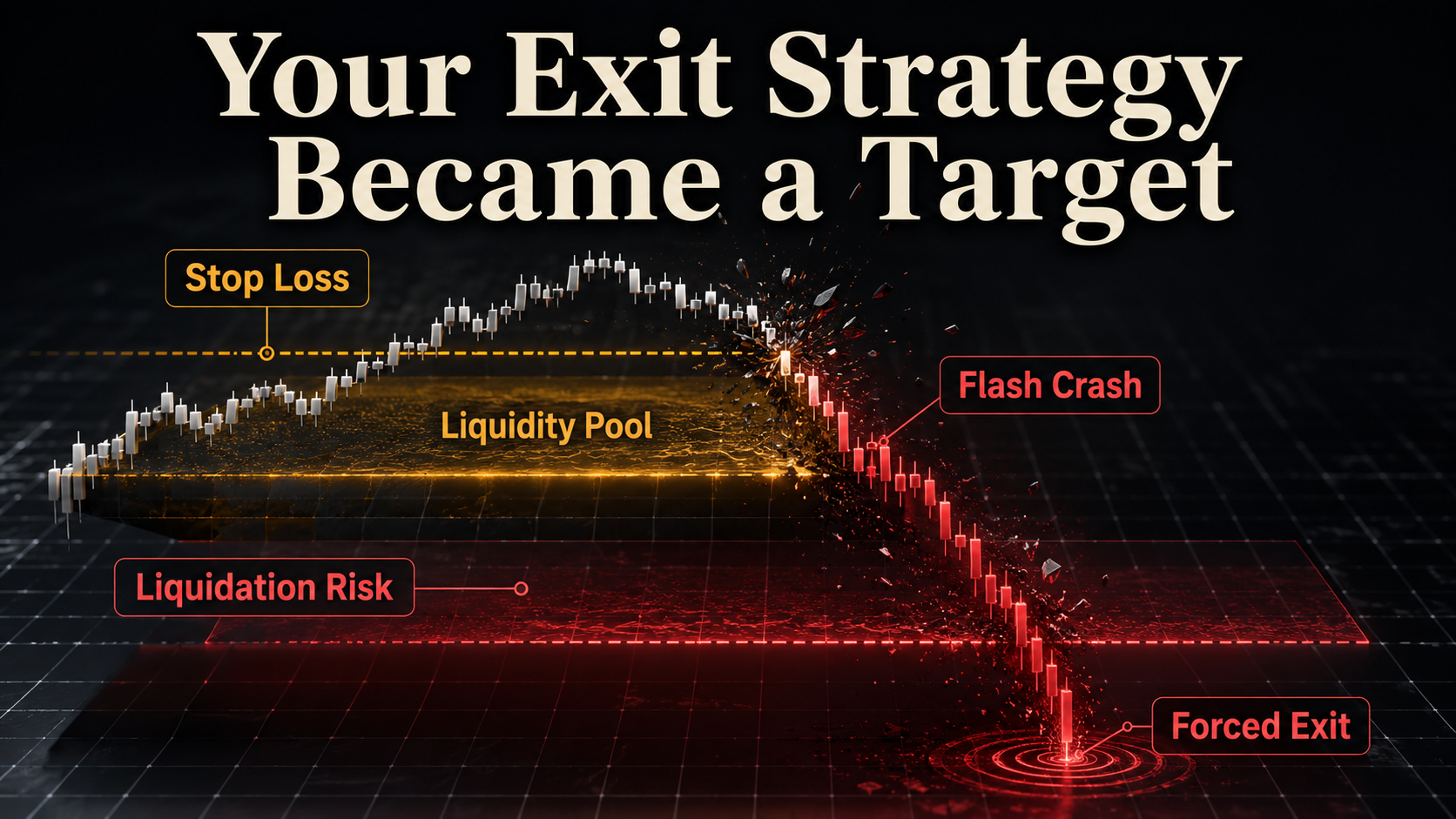
Then a flash crash happens. The market violently drops 10% in two minutes. You check your account, expecting a small, controlled loss. Instead, you stare at a zero balance. You haven’t just been stopped out; you have been liquidated. Understanding the brutal difference between a Crypto Liquidation and a Stop Loss is the only way to stop donating your margin to the market makers.
Stop Loss: The Target on Your Back
In theory, a Stop Loss is a defensive tool. It is an automated order placed at a specific price to limit your downside. But here is the reality of Smart Money operations: your Stop Loss is not a secret. It sits in a massive Liquidity Pool visible to institutional algorithms. Market makers actively push prices into these zones to trigger retail stop losses, securing the liquidity they need to fill their own massive orders.
This is why you constantly experience the price hitting your exact stop loss level, only to immediately reverse in your original direction. You are not trading against the market; you are trading against algorithms that are explicitly mapped to consume your stop-loss positions. You are providing the exit liquidity for the very institutions that are moving the price.
Liquidation vs. Stop Loss: The Mechanics of Failure
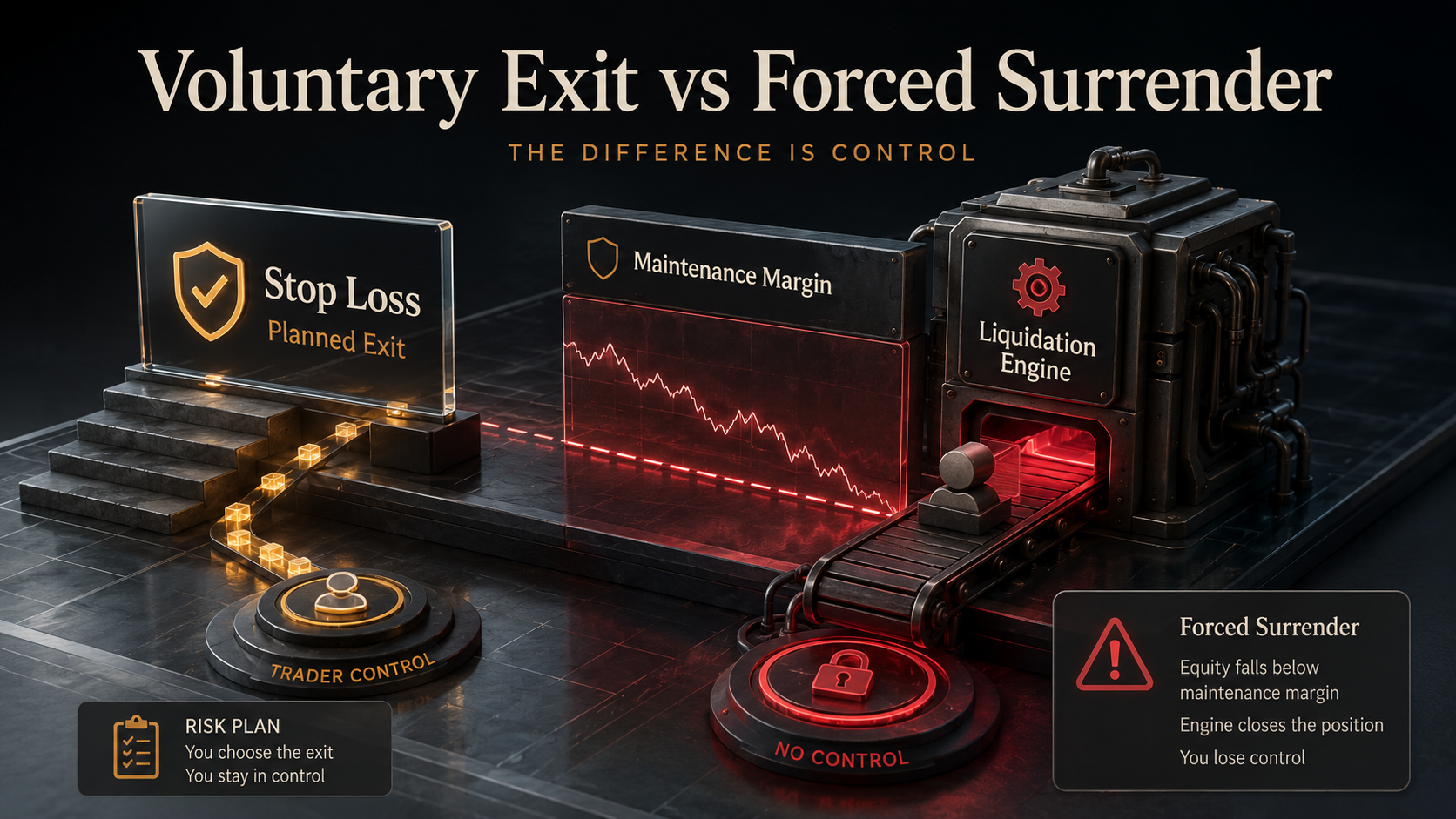
While a Stop Loss is a voluntary (though often manipulated) exit, a Liquidation is a forced surrender. When you trade with leverage, you are borrowing money from the exchange. If the market moves against you and your losses consume your maintenance margin, the exchange’s liquidation engine steps in.
The core difference is control. A Stop Loss gives you a defined, albeit manipulated, exit. Liquidation removes your agency entirely. If you are using Cross Margin, a single bad trade can cascade through your entire account balance, wiping out capital that wasn’t even allocated to that specific position. Liquidation is the market’s way of saying you no longer have the equity to participate in the game.
If you want to understand the leverage mechanism behind forced exits, read How Does Leverage Work in Crypto Futures Trading?. That article explains how initial margin, maintenance margin, and the liquidation engine decide when control is taken away from the trader.
The Case Study: The “Breakout” Trap of 2026
Let’s look at a concrete example from last month. Bitcoin was consolidating below $65,000. Retail traders were focused on the resistance level. When the price broke $65,000, volume surged. Thousands of traders placed their Stop Losses right at $64,800.
The Smart Money did not buy the breakout. They anticipated the retail FOMO. They waited for the price to hit $65,500—long enough for the late-to-the-party retail buyers to get fully committed—and then unleashed a massive, coordinated sell-off. The price dropped through $64,800 in milliseconds.
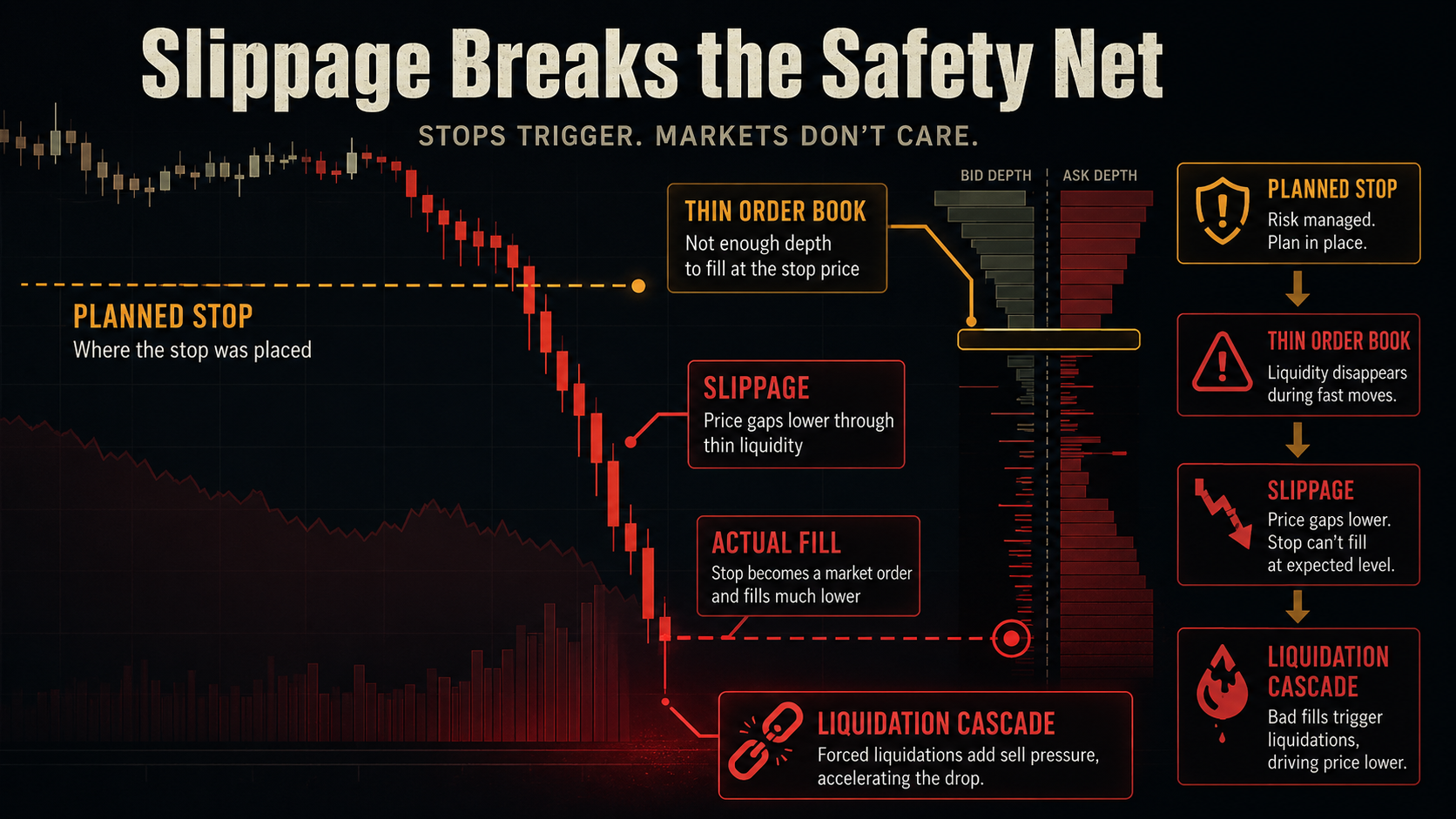
Your Stop Loss at $64,800 was triggered. But because the price was plummeting, the exchange could not fill your sell order at $64,800. It filled at $64,200. This slippage was the difference between a controlled 1% loss and a devastating 5% hit to your maintenance margin, triggering an immediate liquidation cascade. You were liquidated not because your analysis was wrong, but because your exit structure was fragile.
The Hidden Mechanisms: Slippage and Order Book Thinning
Here is the ultimate retail nightmare: You had a Stop Loss set, but you still got Liquidated. How is this mathematically possible? The answer is Slippage. During periods of extreme volatility, the order book thins out. Your Stop Loss becomes a Market Order. Because the price is falling so fast, there are no buyers at your expected price.
If you are highly leveraged, this slippage can instantly drag your account equity below the maintenance margin. Your supposed “safety net” completely fails. This is not bad luck; it is a structural inevitability of using retail-grade exit strategies in a high-leverage institutional environment.
For the broader loss boundary behind leverage trades, read How Much Can You Lose Trading Crypto With Leverage?. That article breaks down why margin is not the full risk, and how position size, slippage, liquidation distance, and cross margin expose hidden account damage.
The Psychological War: Revenge Trading
What happens immediately after your stop-loss is hit? The psychological damage kicks in. You feel cheated, leading directly to Revenge Trading. You re-enter the market out of anger, usually with a worse entry price or higher leverage.
Smart Money anticipates this response. They know that a trapped trader is an irrational trader. By creating these violent, sudden reversals, they don’t just take your money once; they break your psychological discipline, ensuring you make a series of fatal errors in the next 15 minutes. You are fighting a highly calculated algorithm with pure, blind emotion.
Stop Trading Blindfolded: The Diagnostic Approach
Stop guessing where to place your exits based on lagging retail indicators. Placing a stop loss just below a random support line is financial suicide. To survive, you must deploy X-Ray Diagnostics to see the market’s true structural depth.
Before choosing position size, use the Maximum Risk Calculator to define the loss amount before the trade is opened. No defined risk, no execution.
You need to identify where the institutional liquidity lies before you ever enter a trade. If you cannot read the underlying momentum, your stop loss is merely an appetizer for the next liquidation cascade. You need a structured system that reads the institutional footprint before you click. The difference between a controlled exit and a catastrophic liquidation lies in your ability to distinguish between a genuine trend and a liquidity trap.