The first trade was not the real problem.
The second trade was.
After a small loss, the trader stayed on the chart. BTC moved again. A new candle appeared. The market looked active, and the next entry felt necessary.
There was no clean setup yet.
No clear structure.
No defined invalidation.
No real reason beyond pressure.
The click still happened.
That is how overtrading crypto usually begins.
It does not always start with one reckless trade. It often starts with one trade that fails, one missed move, or one fast candle that makes the trader feel behind. The trader stops waiting for structure and starts reacting to motion.
By the end of the session, the loss is no longer caused by one bad entry.
It is caused by too many entries that were never real setups.
Overtrading in crypto is dangerous because the market always gives another candle. A new move appears every minute. A new breakout seems possible. A small pullback looks tradable. A fast wick feels urgent.
The trader begins to confuse activity with opportunity.
A serious crypto trading process should reduce decisions before it increases trades. Structure, invalidation, position size, and session limits must exist before the entry. Without those boundaries, the trader is no longer trading the market.
The trader is trading the urge to act.
This article is for educational purposes only. It does not provide financial advice, trading signals, or guaranteed trading results.
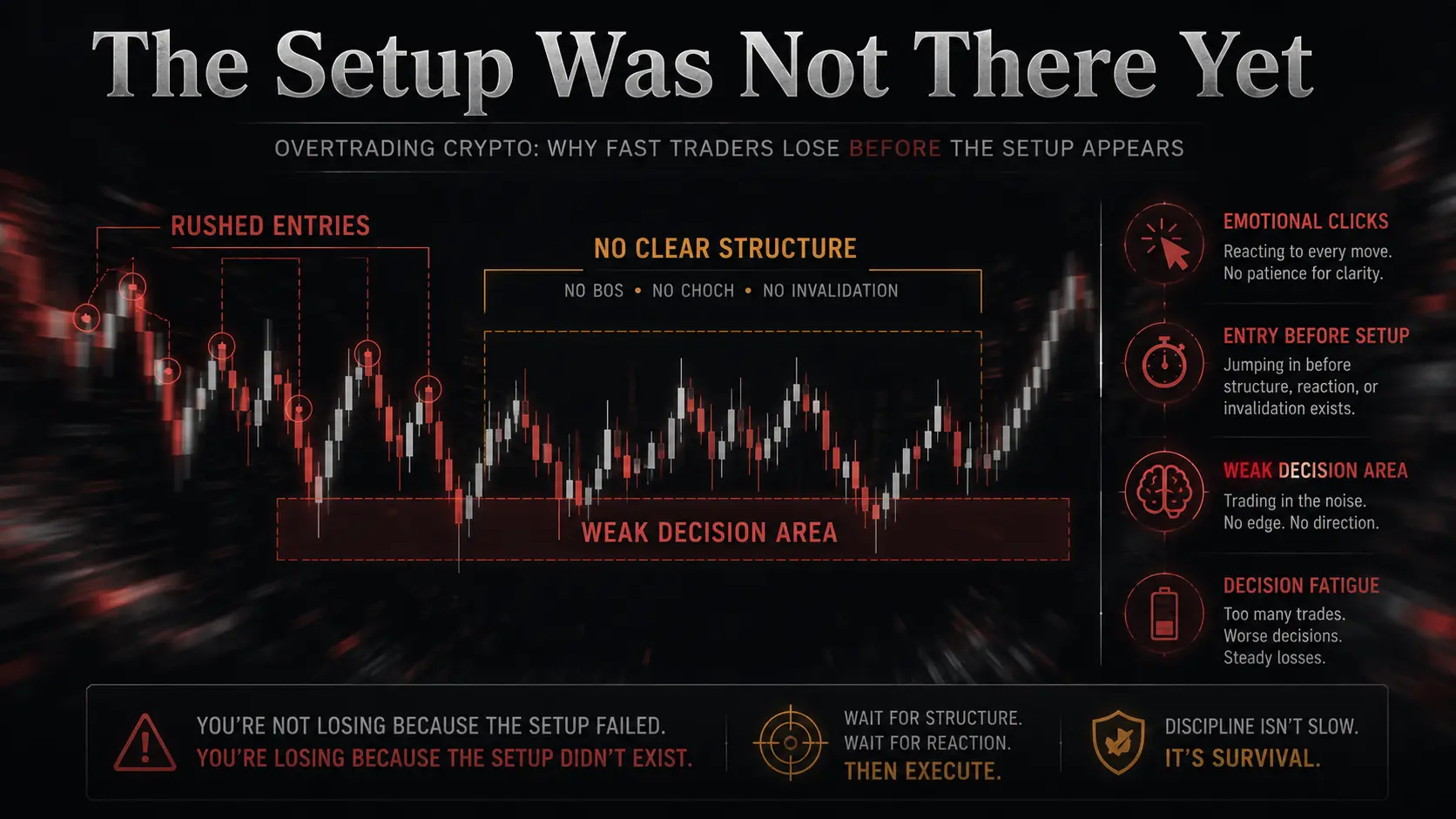
The Market Did Not Force the Next Trade
Crypto moves constantly.
That movement creates pressure.
A trader sees BTC move after a loss and feels that the next opportunity is already leaving. The chart becomes a source of urgency. Every candle feels like a chance to recover, catch up, or avoid missing the move.
But the market did not force the next trade.
The trader did.
This is the core of overtrading.
The next entry often comes from internal pressure, not from market structure. The trader wants to repair the previous result, reduce regret, or prove that the original idea was still right.
That changes the decision.
A clean trade begins with structure.
An overtrade begins with emotion.
The trader may still use technical language after the click. They may mention support, resistance, momentum, or a breakout. But the real reason for the entry was already formed before the analysis.
The trade was taken because the trader wanted action.
Not because the setup was ready.
Overtrading Feels Productive While It Damages the Account
Overtrading feels active.
That is why it is hard to notice in real time.
The trader is watching the chart. They are making decisions. They are reacting quickly. They feel engaged, focused, and involved.
From the outside, it looks like trading.
Inside the account, it is usually damage.
Every extra trade adds fees, spread, slippage, emotional load, and risk exposure. A weak entry may not look dangerous alone. But five weak entries in one session can do more damage than one obvious mistake.
Crypto makes this worse because the market rarely feels quiet. BTC, ETH, and high-volatility altcoins can create enough movement to justify almost any impulse.
A candle expands.
A wick appears.
A range breaks.
A signal arrives.
A trader who wants another reason to enter will always find one.
That is why overtrading is not solved by adding more indicators. More information often gives the trader more excuses.
The real solution is fewer valid decisions.
If frequent small wins still leave the account red after one oversized loss, fees, and slippage, read Realistic Win Rate for BTC Scalping Strategies. That article explains why high accuracy can still lose money when trade frequency and bad loss structure work against the account.
A setup either exists or it does not.
Activity is not proof.
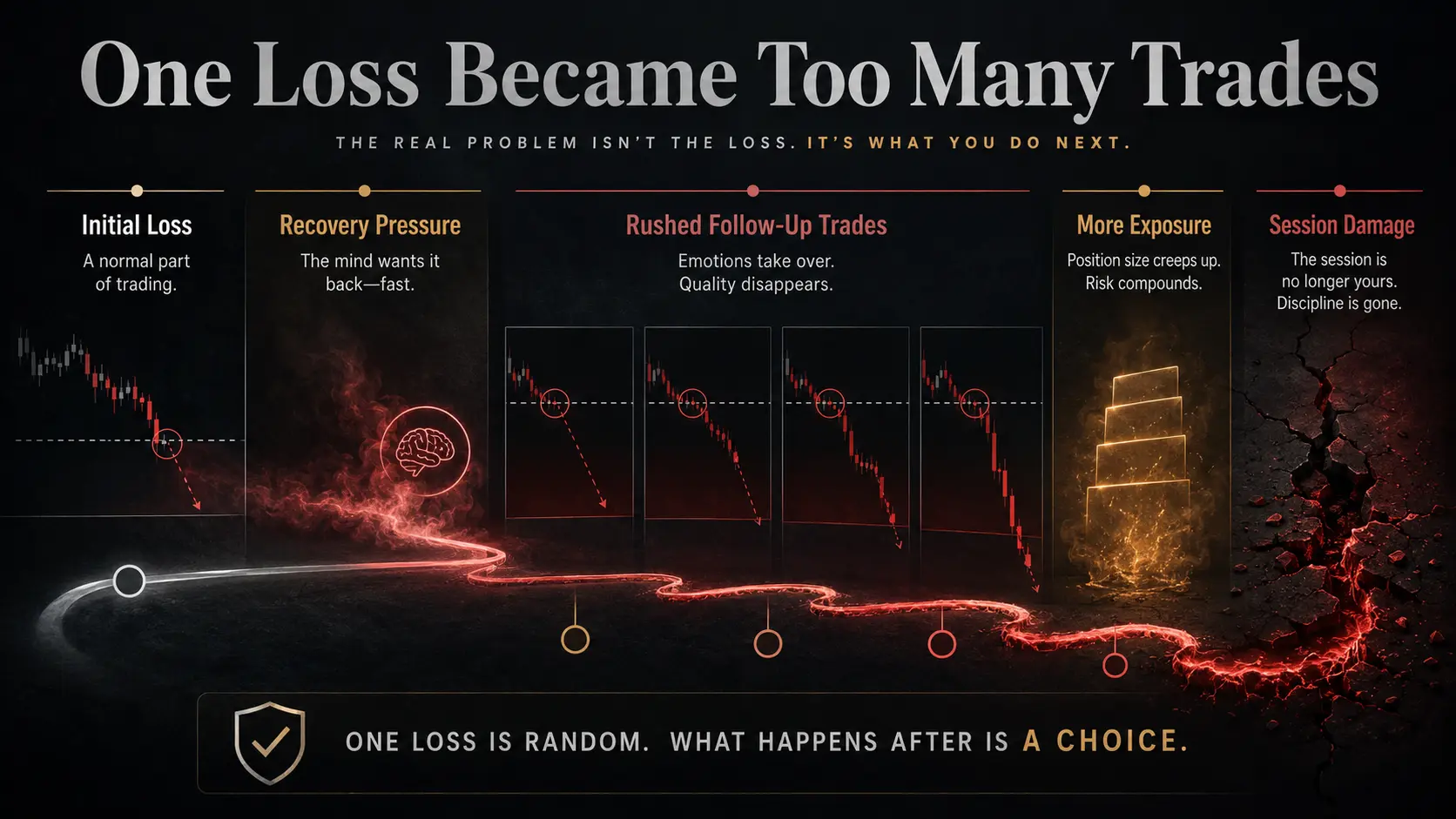
The First Loss Changes the Next Decision
One loss can change the entire session.
Before the loss, the trader may be patient. After the loss, the trader starts watching the chart differently. Every small move becomes a possible recovery. Every missed candle feels more painful.
The trader is no longer reading the market from a neutral state.
They are trying to repair the session.
This is where overtrading connects with revenge trading.
The next trade may look technical, but the emotional background is different. The trader wants the account back to where it was before the loss. The goal shifts from finding a clean setup to removing discomfort.
That shift is dangerous.
The market does not care that the trader wants recovery.
A weak setup after a loss is still weak.
A late entry after a loss is still late.
Oversized risk after a loss is still oversized.
The first loss is not always the problem. The reaction to the first loss often creates the larger damage.
If the next trade starts to feel like a way to repair the previous loss, read Revenge Trading Crypto. That article explains how one loss can turn into an emotional recovery cycle when the trader tries to win the money back too quickly.
A disciplined trader treats a loss as information.
An overtrading trader treats a loss as something that must be fixed immediately.
The Setup Appears After the Trader Already Clicked
A clean trade has a sequence.
The market structure appears first. Price moves into a decision area. Reaction forms. Invalidation becomes clear. Risk can be defined. Only then does the entry become worth evaluating.
Overtrading reverses that order.
The trader clicks first.
Then tries to justify the entry.
This is why overtrading often sounds logical after the trade is opened. The trader starts finding reasons on the chart. A nearby level becomes support. A candle becomes confirmation. A small pullback becomes a retest.
But those reasons were not clear before entry.
They were assembled after the position already existed.
That is not analysis.
That is defense.
In fast crypto trading, this mistake happens quickly. The trader does not always notice the reversal. The candle moves, the entry happens, and the explanation comes later.
A real setup should not need to be invented after the click.
If the click happens before structure, reaction, invalidation, and position size are clear, read 1-Minute Crypto Scalping Strategy. That page explains how fast entries should be filtered before execution, not justified after the position is already open.
If the trade only becomes clear after the position is open, the entry was probably too early, too emotional, or too forced.
More Trades Do Not Create More Control
Overtrading creates the illusion of control.
After a loss, taking another trade can feel like taking action. After missing a move, entering the next candle can feel like fixing hesitation. After sitting flat for too long, opening a position can feel like progress.
But more trades do not create more control.
They usually create more exposure.
Each entry gives the market another chance to punish weak structure. Each rushed trade adds another decision under pressure. Each loss makes the next decision heavier.
This is how a session deteriorates.
The trader begins with one idea.
Then reacts to the result.
Then reacts to the reaction.
By the end, the session no longer has a strategy. It has a chain of emotional responses.
Crypto rewards patience more than constant clicking. The market may move all day, but the trader does not need to participate in every movement.
A flat position is not a failure.
A skipped trade is not weakness.
No trade can be the strongest decision in a session where the setup is not clean.
Overtrading Hides Behind Small Position Sizes
Some traders think overtrading is only a problem when size is large.
That is not true.
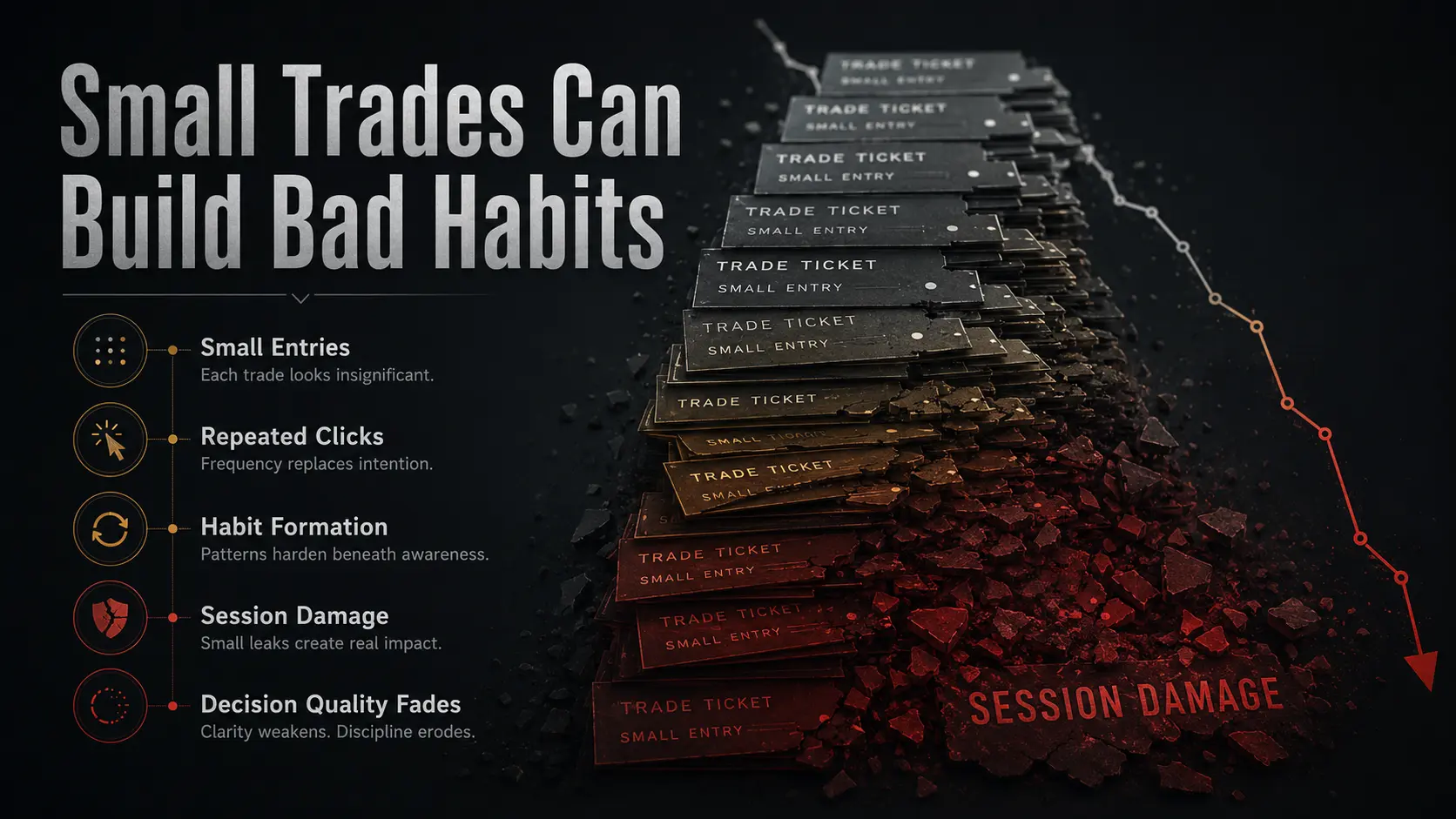
Small size can still create bad habits. A trader may use small positions to justify frequent entries. The account may not be destroyed quickly, but the process becomes weaker with each unnecessary trade.
Small overtrades create repetition.
Repetition creates habit.
Habit becomes identity.
The trader starts to believe that trading means always being involved. They become uncomfortable when the account is flat. They watch the chart looking for reasons to enter instead of waiting for reasons to trade.
This is dangerous because the behavior can grow.
Small overtrading often becomes larger after a win streak or a losing streak. Confidence increases size. Frustration increases size. Recovery pressure increases size.
The problem was built earlier.
The trader trained themselves to act without a real setup.
A strong risk process does not only control large trades.
It also controls unnecessary trades.
A Session Needs a Stop Rule Before the First Trade
A session without a stop rule is already vulnerable.
The trader may have a chart setup, but they do not have a session boundary. Once losses or frustration appear, the trader has no predefined reason to stop.
This is when overtrading becomes easy.
The trader takes one more trade because the day is not finished. Then another because the loss is still recoverable. Then another because the chart finally looks active.
The session becomes open-ended.
That is dangerous.
A stop rule protects the trader before emotion enters. It defines when the session is over, regardless of whether the trader wants another chance.
A stop rule can be based on maximum session loss, number of trades, repeated mistakes, emotional state, or poor market conditions. The exact rule depends on the trader, but the purpose is the same.
It prevents the session from becoming a negotiation.
When the stop rule is created after frustration appears, it is usually too late.
The rule must exist before the first trade.
The Best Filter Is Not Another Indicator
Overtrading traders often look for another indicator.
They want a better signal, cleaner confirmation, or a stronger entry rule. Those tools can help, but they do not solve the main problem if the trader still takes trades outside the plan.
The issue is not always information.
The issue is permission.
The trader gives themselves permission to enter too often.
A strong filter removes permission.
No structure, no trade.
No reaction, no trade.
No invalidation, no trade.
Oversized risk, no trade.
Recovery pressure, no trade.
This is not a complicated system. It is a refusal system. It blocks weak entries before they reach the account.
The trader does not need ten more reasons to enter.
The trader needs clearer reasons to reject.
That is what reduces overtrading.
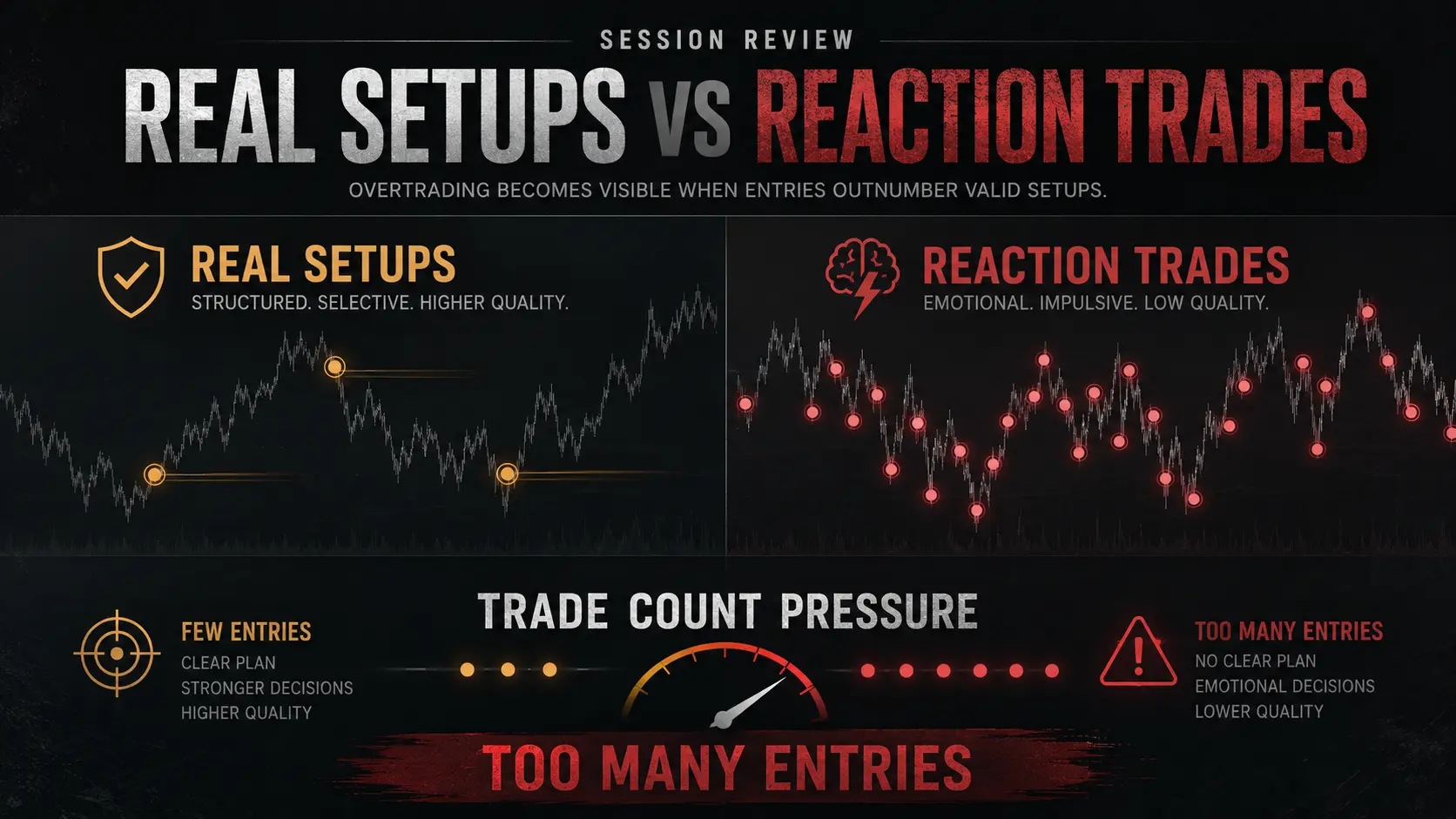
The Trade Count Reveals the Real Problem
A trader can learn a lot by reviewing the number of trades taken in a session.
The chart may show that only two or three setups were clean.
The account history may show ten entries.
That gap is the problem.
The extra trades usually come from emotion, boredom, recovery attempts, late entries, or fear of missing out. They are not part of the strategy. They are the cost of poor session control.
A clean review separates real setups from reaction trades.
Real setups have structure before entry.
Reaction trades have excuses after entry.
Real setups have invalidation.
Reaction trades have hope.
Real setups fit risk.
Reaction trades depend on the next candle saving the decision.
This review is uncomfortable, but useful. It shows whether the trader lost because the strategy failed or because the trader stopped following it.
Overtrading usually appears clearly after the session ends.
The goal is to recognize it before the next entry.
The Final Rule for Overtrading Crypto
Overtrading is not solved by promising to be more careful.
It is solved by removing low-quality decisions before they become trades.
The trader must stop treating every candle as a new opportunity. Most candles are only movement. Most movement is not a setup. Most setups are not worth trading if invalidation, size, and session risk are not clear.
A crypto trader who wants fewer emotional losses needs fewer forced entries.
The clean process is simple.
The structure appears before the trade.
The reaction appears before the trade.
Invalidation is defined before the trade.
Maximum risk is accepted before the trade.
The session stop rule exists before the first trade.
When those conditions are missing, the best decision is not another click.
The best decision is to let the market move without the account attached to it.
In crypto trading, control is not proven by how many trades the trader can take.
Control is proven by how many weak trades the trader can refuse.