The trade did not fail because the idea was impossible.
The trader saw a clean setup. Price reached a structure level. The direction looked reasonable. The entry did not look random.
Then the position was opened with leverage.
At first, nothing looked wrong.
The market pulled back.
Not a collapse.
Not a full reversal.
Just a normal move against the entry.
That was enough.
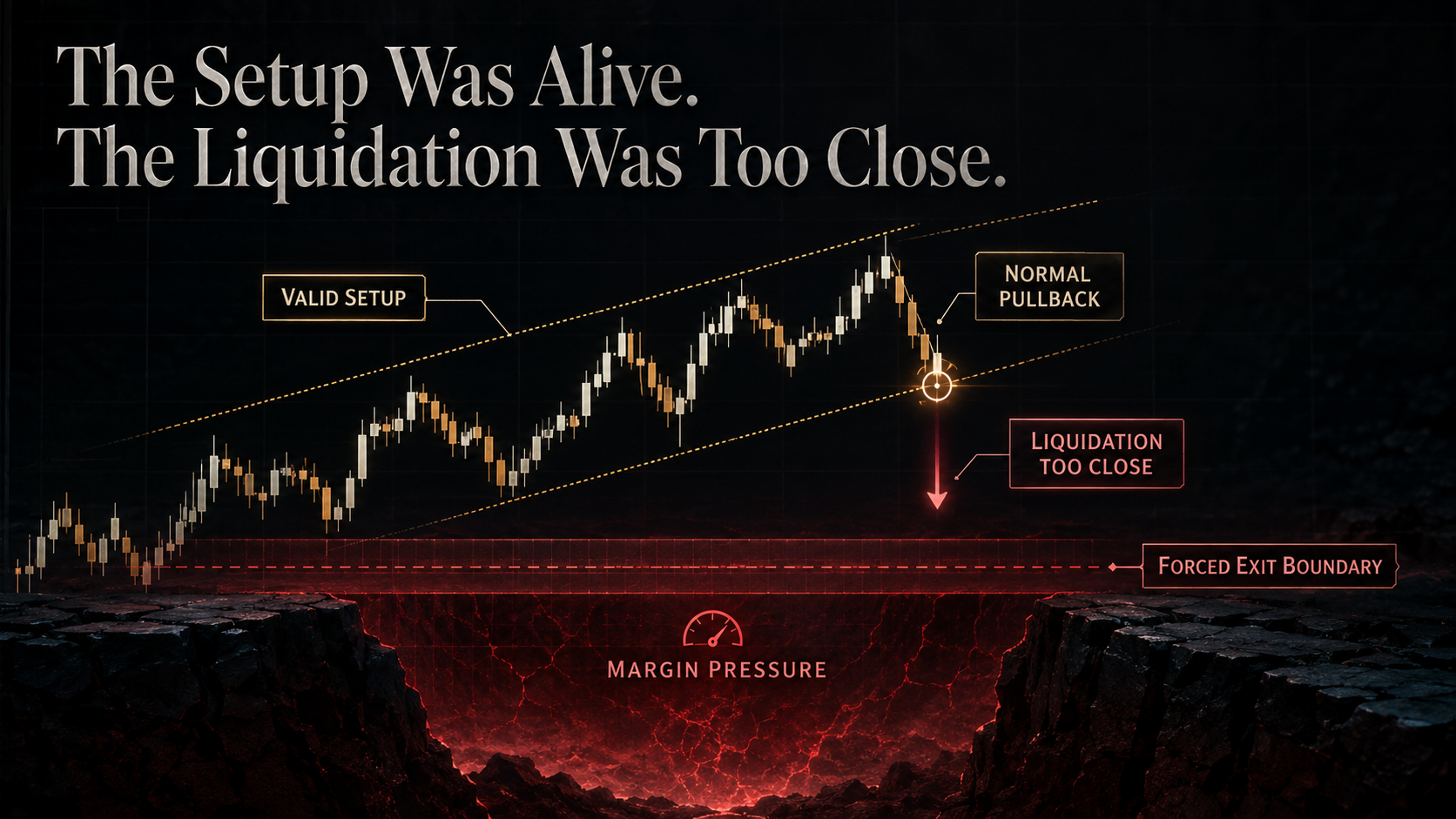
Margin pressure appeared. The liquidation price was closer than the trader expected. The position started feeling dangerous before the trade idea was even clearly invalidated.
This is how many leveraged crypto trades fail.
The problem is not only direction.
The problem is liquidation distance.
A crypto liquidation calculator is not something to check after the position is already open. It should be part of the decision before entry. If liquidation sits inside normal market noise, the position is already fragile.
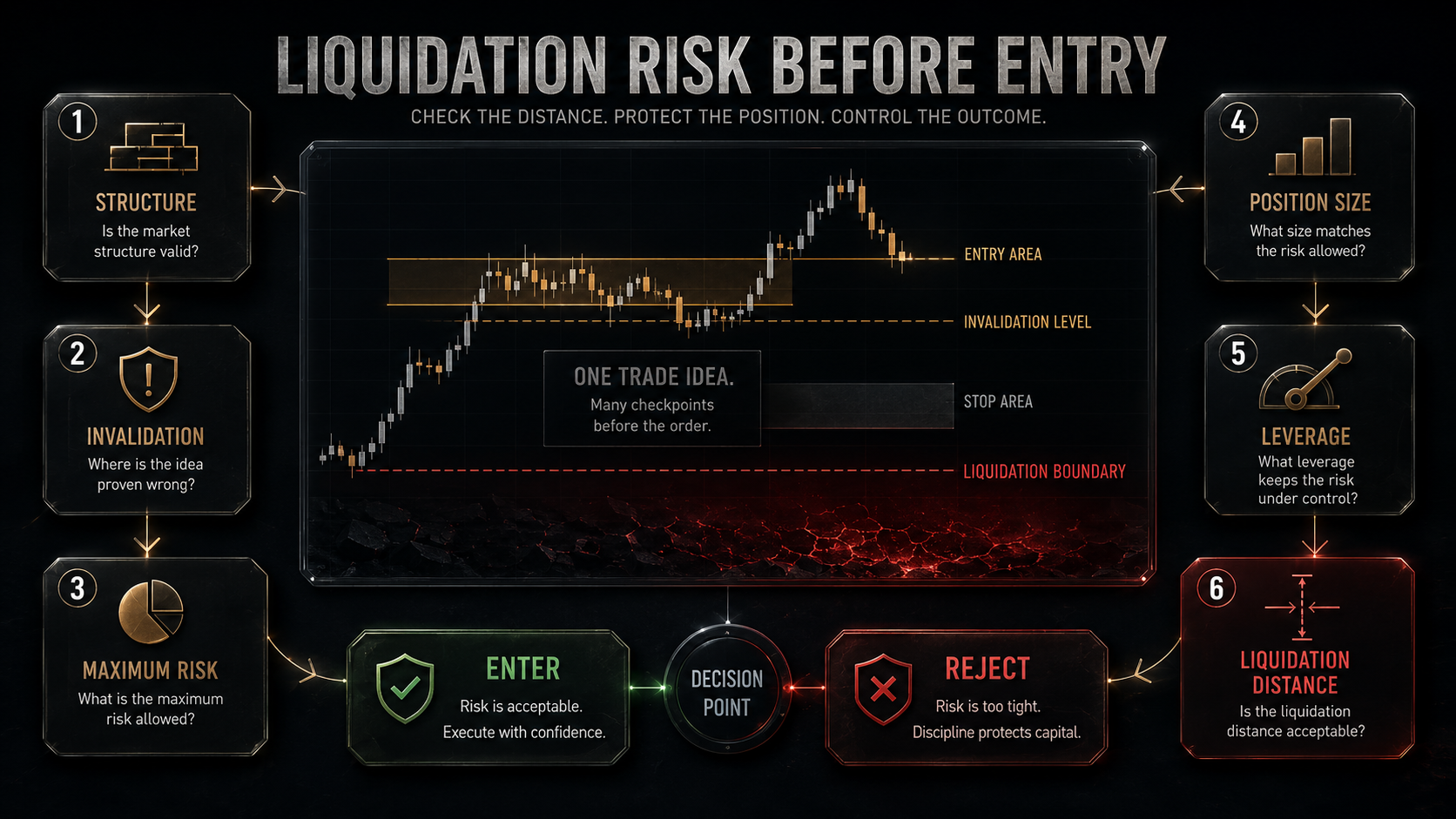
A serious futures trade should know four things before entry:
Structure.
Invalidation.
Position size.
Liquidation distance.
If liquidation comes before invalidation, the trader has lost control. The exchange is deciding where the trade ends, not the trade plan.
This article is for educational purposes only. It does not provide financial advice, trading signals, or guaranteed trading results.
Liquidation Can Happen Before the Trade Idea Is Wrong
This is the part many traders misunderstand.
A trade idea can still be alive while the leveraged position is already in danger.
Price may pull back into a retest area. Price may wick into a normal support zone. Price may move against the entry without fully breaking the structure.
On spot, that movement may simply be uncomfortable.
On futures, that movement can become liquidation pressure.
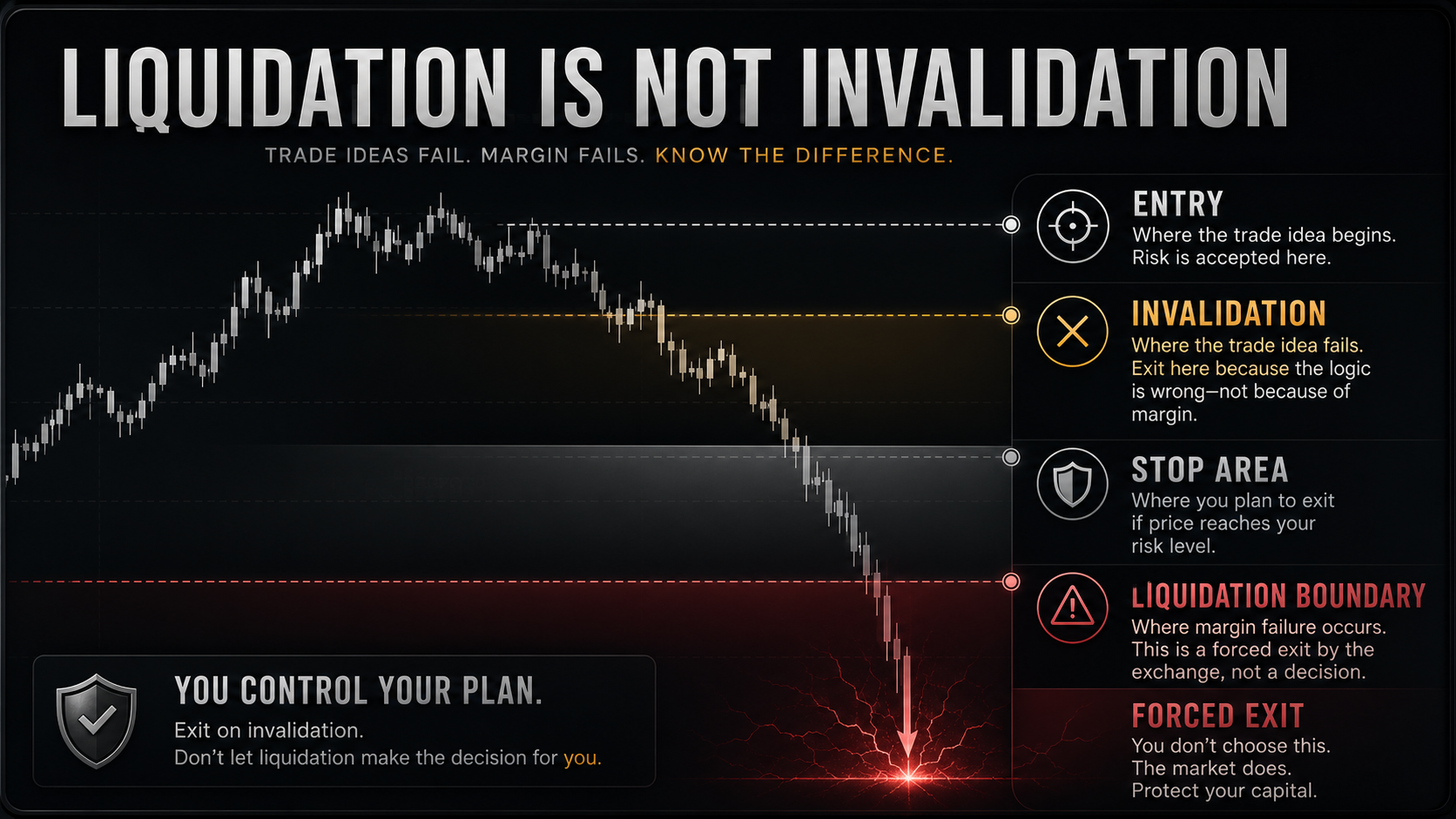
Liquidation is not the same as invalidation.
Invalidation is where the trade idea is wrong.
Liquidation is where the exchange forces the position closed because margin is no longer enough.
Those two levels should not be confused.
If liquidation is closer than the structural invalidation point, the trade is badly designed. The position can be forced out before the market even proves the idea wrong.
That is not a trading strategy.
That is a margin failure waiting to happen.
To separate a planned exit from a forced platform exit, read Crypto Liquidation vs Stop Loss. That article explains why a stop loss is part of the trader’s plan, while liquidation is the exchange taking control away from the trader.
The Liquidation Price Is Not a Stop Loss
Some traders treat liquidation like the worst-case stop.
That is a dangerous habit.
A stop is part of the trade plan.
Liquidation is a forced exit.
A stop can be placed around structure. Liquidation is controlled by leverage, margin, position size, maintenance requirements, and market movement.
When liquidation becomes the real exit, the trader no longer controls the trade. The exchange controls it.
This matters because liquidation usually happens under pressure. The trader may add margin, widen risk, close emotionally, or refuse to exit because the loss feels too large.
That emotional pressure was built into the position before entry.
A crypto liquidation calculator helps expose that pressure early.
It shows whether the position has enough room to survive normal volatility, retests, and wicks before the trade idea is actually invalidated.
If it does not, the trade should be resized, deleveraged, or skipped.
Leverage Pulls Liquidation Closer
Leverage changes how much room the position has.
Higher leverage usually means less distance between the entry and liquidation. The position becomes more sensitive to smaller moves. A normal pullback can create pressure faster.
That does not mean leverage is always wrong.
It means leverage must be checked against structure.
A trade with wide invalidation and high leverage can be dangerous because the position may not survive the distance the setup needs.
A trade with a smaller position and more liquidation distance may have more room to breathe.
The problem begins when traders choose leverage first.
They open the platform, select a leverage setting, then look for a trade that fits the size they want.
That order is backwards.
The trade should define the risk.
The risk should define the position.
The position should define whether leverage is acceptable.
When leverage is chosen before liquidation distance is checked, the trade may look affordable but remain structurally fragile.
For the full futures leverage mechanism behind margin pressure and liquidation distance, read How Does Leverage Work in Crypto Futures Trading?. That article breaks down initial margin, maintenance margin, and the liquidation engine behind forced exits.
Position Size Can Move Liquidation Risk More Than the Trader Expects
Liquidation risk is not only about the leverage number.
Position size matters.
Margin matters.
Entry location matters.
Distance to invalidation matters.
A trader may use moderate leverage but still create a fragile position if the size is too large for the account. Another trader may use the same leverage with a smaller position and have more room.
This is why looking only at leverage is incomplete.
The liquidation calculator should be used after the trade structure is known. The trader needs to understand where the idea is wrong, how much account risk is allowed, and how much size is being opened.
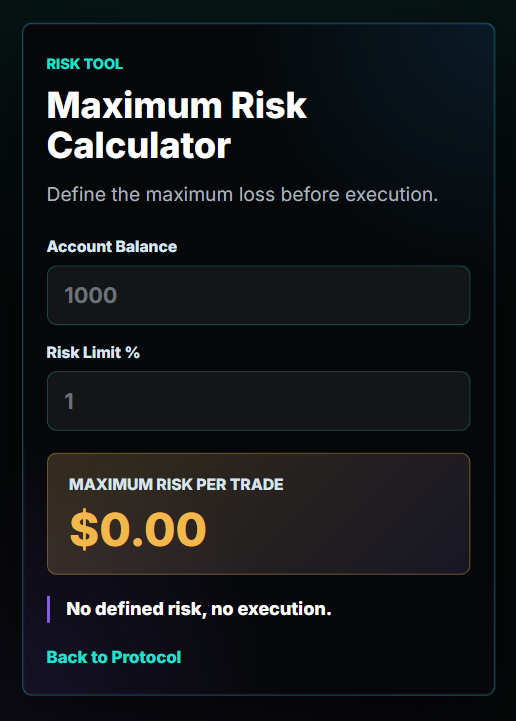
Before checking liquidation risk, maximum risk should be defined first.
Use the calculator here to define account risk before building the position:
Open the Maximum Risk Calculator
The First Pullback Reveals a Weak Position
A weak leveraged position often looks fine until the first pullback.
The entry may be reasonable.
The structure may still be intact.
The market may only be retesting.
But if the liquidation distance is too close, the first pullback changes the trader’s behavior immediately.
The trader stops reading structure.
The trader starts watching margin.
The trade becomes about survival instead of execution.
This is the warning sign that risk was not built correctly.
A futures position should be able to handle normal movement inside the trade idea. If the first retest creates liquidation fear, the position is too sensitive.
That sensitivity usually comes from oversized position size, excessive leverage, late entry, or poor margin planning.
The chart may still be normal.
The position is not.
Liquidation Distance Must Sit Outside Normal Noise
Crypto markets are noisy.
Wicks happen.
Retests happen.
Fast pullbacks happen.
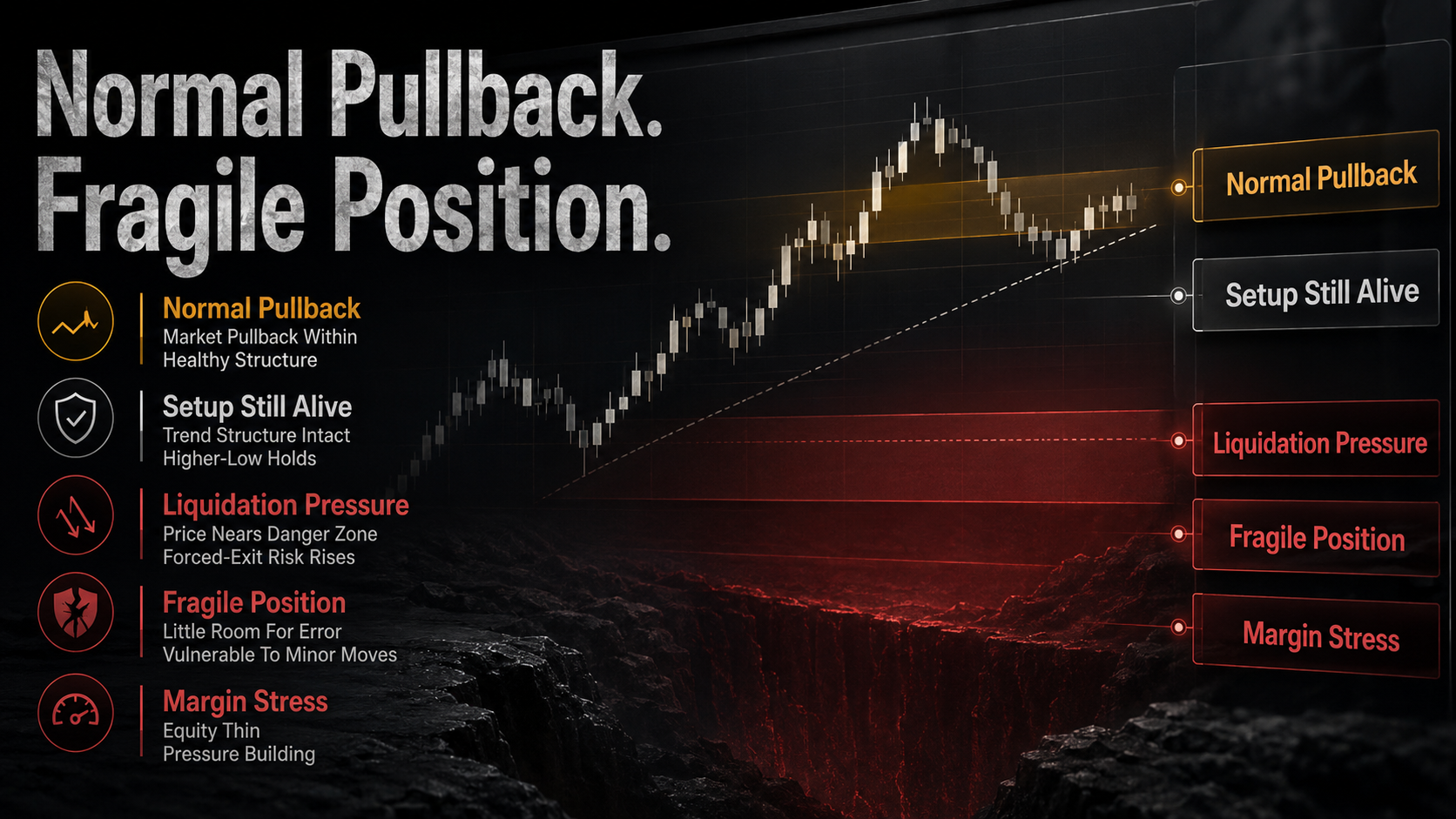
A liquidation level that sits too close to normal movement gives the trade no room.
The position may be technically open, but practically fragile.
This is especially dangerous in volatile markets. A wick can remove the position even if price later returns in the expected direction. The trader may be directionally right but structurally wrong in risk design.
A liquidation calculator should help identify whether the liquidation boundary is too close to the normal movement around the setup.
If liquidation sits inside the area where ordinary volatility happens, the position is not ready.
The solution is not to hope for cleaner candles.
The solution is to reduce size, reduce leverage, add margin carefully if appropriate, or skip the trade.
The trade should not need perfect market behavior to survive.
A Better Liquidation Risk Sequence
A better liquidation process starts before the order.
First, the trader identifies the structure.
Then invalidation is defined.
Then maximum account risk is set.
Then position size is calculated.
Then leverage and liquidation distance are checked.
Only after that does the trader decide whether the position can be opened.
This order matters.
If liquidation is checked only after entry, the trader is already emotionally attached to the position.
If liquidation distance is checked before entry, the trader can still reduce the position, lower leverage, adjust the plan, or reject the trade.
A liquidation calculator is most useful before the trade exists.
After the trade exists, it becomes a stress monitor.
Before the trade exists, it becomes a risk filter.
What a Dangerous Liquidation Setup Looks Like
A dangerous liquidation setup often has the same structure.
The entry comes after price already moved.
The position size is larger than the account can comfortably absorb.
The leverage is chosen before invalidation is defined.
The liquidation level is too close to the entry.
The trader believes the setup is strong enough to justify the risk.
Then the market produces a normal move against the entry.
That is enough.
The issue was not only that price moved against the trade. Price always moves. The issue was that the position had no room.
A good trade idea can still become a bad futures position if liquidation distance is poorly designed.
This is why liquidation should never be treated as a distant afterthought.
It is part of the trade structure.
If the question is how much damage a leveraged trade can do when margin, slippage, liquidation distance, and position size stack together, read How Much Can You Lose Trading Crypto With Leverage?. That article explains why the margin box is not the full danger.
The Final Rule for Liquidation Risk
A futures trade is not ready just because the chart looks clean.
It is ready only when liquidation distance is acceptable.
The trade idea may still be valid, but the position can still be too fragile. That difference matters. A trader who ignores liquidation distance may be forced out before the market even proves the setup wrong.
A crypto liquidation calculator does not predict whether the trade will win.
It shows whether the position has enough room to exist.
If liquidation is too close, the position should be reduced.
If leverage compresses the risk too much, leverage should be lowered.
If invalidation is farther than the position can survive, the trade should be rejected.
The goal is not to avoid every loss.
The goal is to avoid being forced out before the trade idea has a fair chance to play out.
In crypto futures, liquidation risk is not a detail after entry.
It is part of the entry decision.