The trader did not lose because the chart was impossible to read.
The setup looked reasonable. BTC was moving cleanly. The breakout had momentum. The entry did not look random.
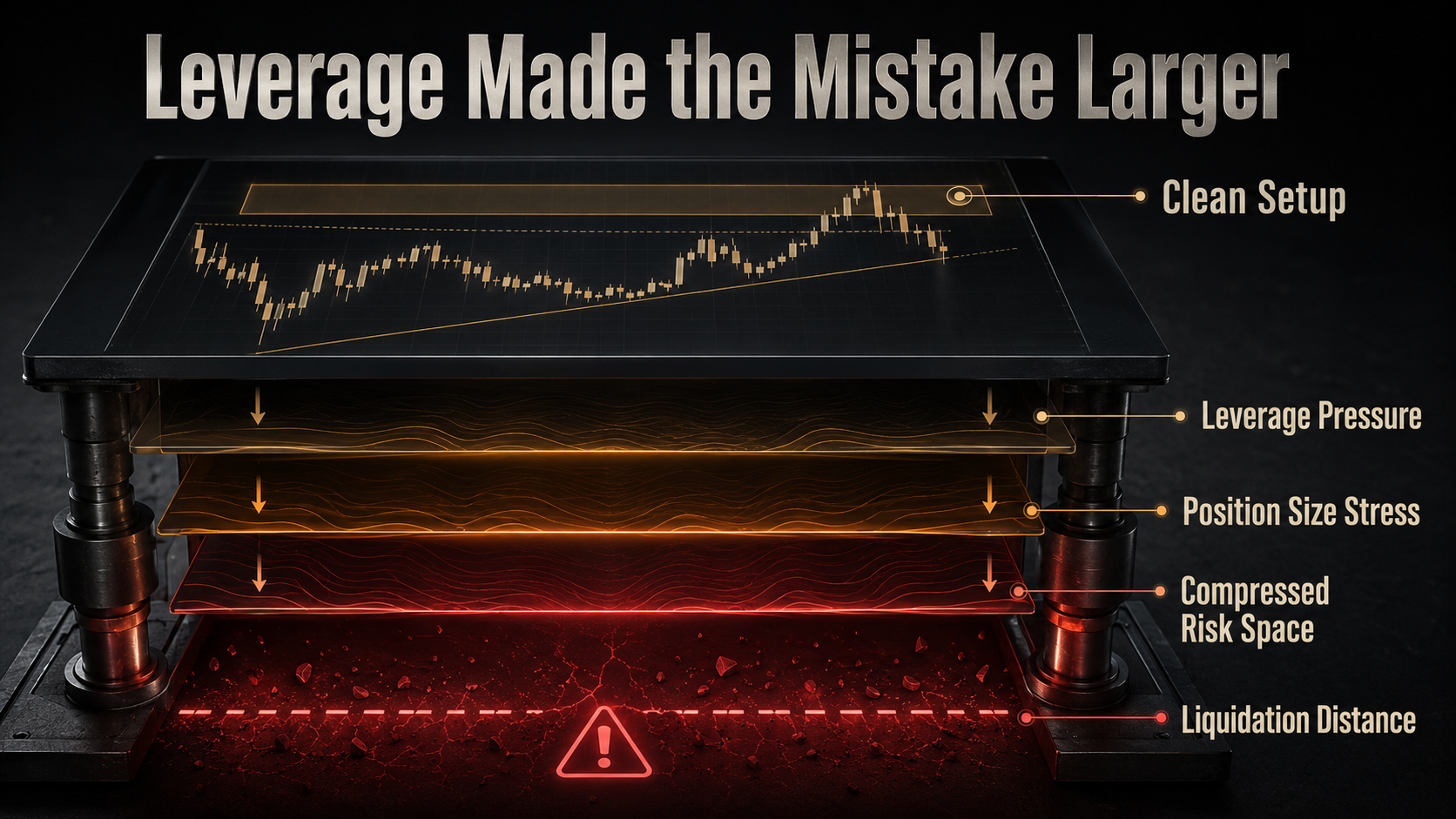
The mistake started when leverage became the first decision.
The trader chose leverage before defining invalidation, before calculating position size, and before checking liquidation distance. The position looked affordable because the required margin was small. But the real exposure was much larger than it felt.
Then BTC pulled back.
Not a collapse.
Not a full reversal.
Just a normal pullback.
That was enough to create pressure.
The position was too large. The liquidation distance was too close. The trader was no longer managing the setup. The trader was managing the margin.
That is why a crypto leverage calculator should not start with leverage.
It should start with risk.
Leverage is not the strategy. It is only a multiplier. If the trade is badly sized, leverage makes the mistake larger. If invalidation is unclear, leverage makes the uncertainty more dangerous. If liquidation is too close, leverage turns normal market movement into account pressure.
A serious leverage decision comes after the trade has structure.
Maximum risk first.
Invalidation second.
Position size third.
Liquidation distance fourth.
Leverage last.
This article is for educational purposes only. It does not provide financial advice, trading signals, or guaranteed trading results.
Leverage Is Not the Trade
Leverage often feels like the most important setting on a futures platform.
It is visible.
It is easy to adjust.
It changes the size of the position immediately.
That makes it dangerous.
Many traders treat leverage like the center of the trade. They decide whether to use 5x, 10x, or more before they have defined what the trade actually is.
That order is wrong.
Leverage should not decide the trade.
The structure should decide the trade.
Invalidation should define the risk.
Position size should fit the account.
Only then should leverage be adjusted to match the position plan.
When leverage comes first, the trader starts from exposure instead of risk. The platform makes the position feel easy to open because the margin requirement is smaller. But smaller margin does not mean smaller danger.
It often means the opposite.
The position is easier to open, but harder to survive.
That is the leverage trap.
Small Margin Can Hide Large Exposure
Crypto futures platforms make leverage feel convenient.
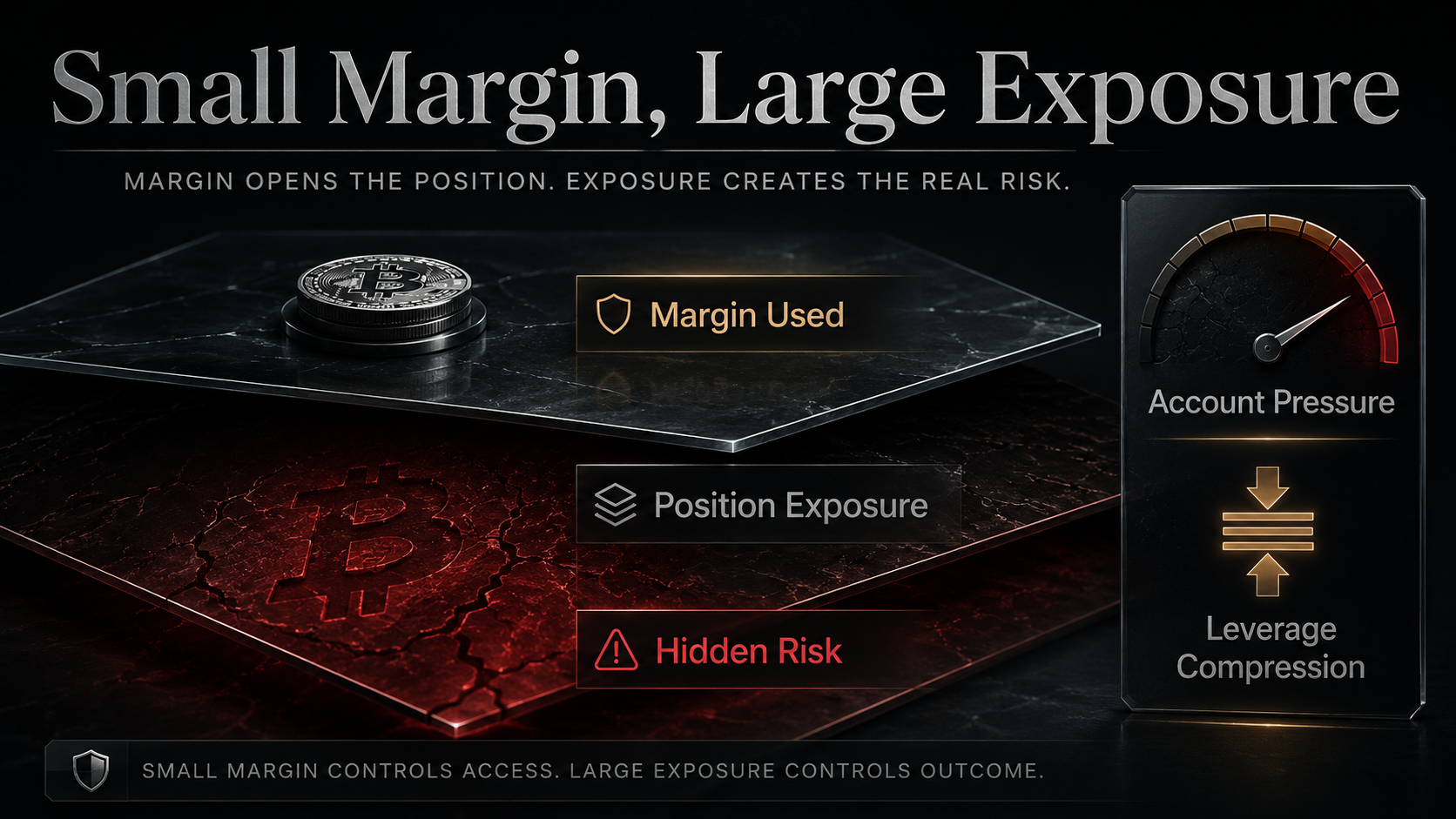
A trader can control a larger position with less margin. That can be useful when risk is already defined, but it becomes dangerous when the trader confuses margin with loss.
Margin is what the platform requires to open the position.
Exposure is the size of the position the market is moving.
Risk is what the account can lose if the trade fails.
Those three are not the same.
A position can use a small amount of margin and still create a large account loss. A trader may feel safe because the margin posted is small, while the real position is too large for the invalidation distance.
This is where leverage creates false comfort.
The trade appears manageable at entry.
Then a normal pullback reveals the real exposure.
The platform did not hide the risk.
The trader looked at the wrong number.
If the difference between margin and exposure still feels unclear, read What Is Leverage Trading Crypto?. That article explains why a small margin can hide a much larger position before the trade is even opened.
The Calculator Should Start With Maximum Risk
A crypto leverage calculator is useful only when the risk is already being defined.
The first number should not be leverage.
The first number should be maximum risk.
Maximum risk is the amount the trader accepts losing if the trade idea fails. It creates a hard boundary before emotions enter the trade.
Without a fixed maximum risk, leverage becomes emotional. The trader adjusts size based on confidence, fear of missing out, or the desire to recover a previous loss.
A simple maximum risk calculation gives the trade a limit.
Account balance.
Risk percentage.
Maximum risk per trade.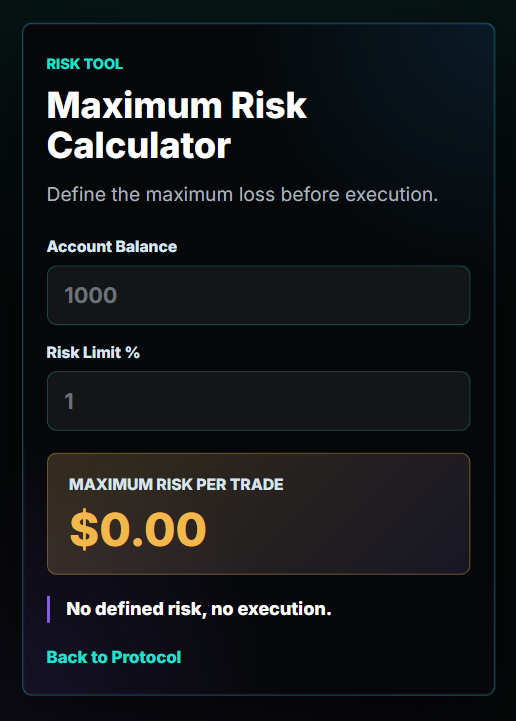
That number becomes the amount the position must obey.
Before calculating position size or leverage, define maximum account risk here:
Open the Maximum Risk Calculator
Position Size Controls the Damage
Leverage gets attention, but position size controls the damage.
Two traders can use the same leverage and carry very different risk depending on position size and invalidation distance.
A small position with clear invalidation may survive normal movement.
A large position with unclear invalidation may become dangerous quickly, even with moderate leverage.
The real issue is not whether leverage sounds high or low.
The real issue is whether the position size fits the risk plan.
This is why leverage cannot be judged alone.
A 3x position can be too large if the size is oversized.
A higher-leverage setting can still be controlled if the actual position size, invalidation, and liquidation distance are managed properly.
The platform leverage number is not the full story.
The full story is exposure.
A leverage calculator that ignores position size is incomplete.
The trade must be sized from risk first, not from excitement.
Invalidation Defines the Trade Before Leverage Is Chosen
A leveraged trade needs a point where the idea is wrong.
That point is invalidation.
Without invalidation, the trader cannot calculate the correct size. Without size, leverage becomes guesswork. Without liquidation distance, the trade may sit too close to forced exit.
Invalidation is not the price where the trader feels nervous.
It is the structure level where the trade idea no longer makes sense.
If a breakout trade depends on holding above a boundary, falling back into the range can invalidate the idea. If a reclaim trade depends on price staying above a reclaimed level, losing that level can invalidate the setup. If a support reaction creates the idea, losing that reaction area can invalidate it.
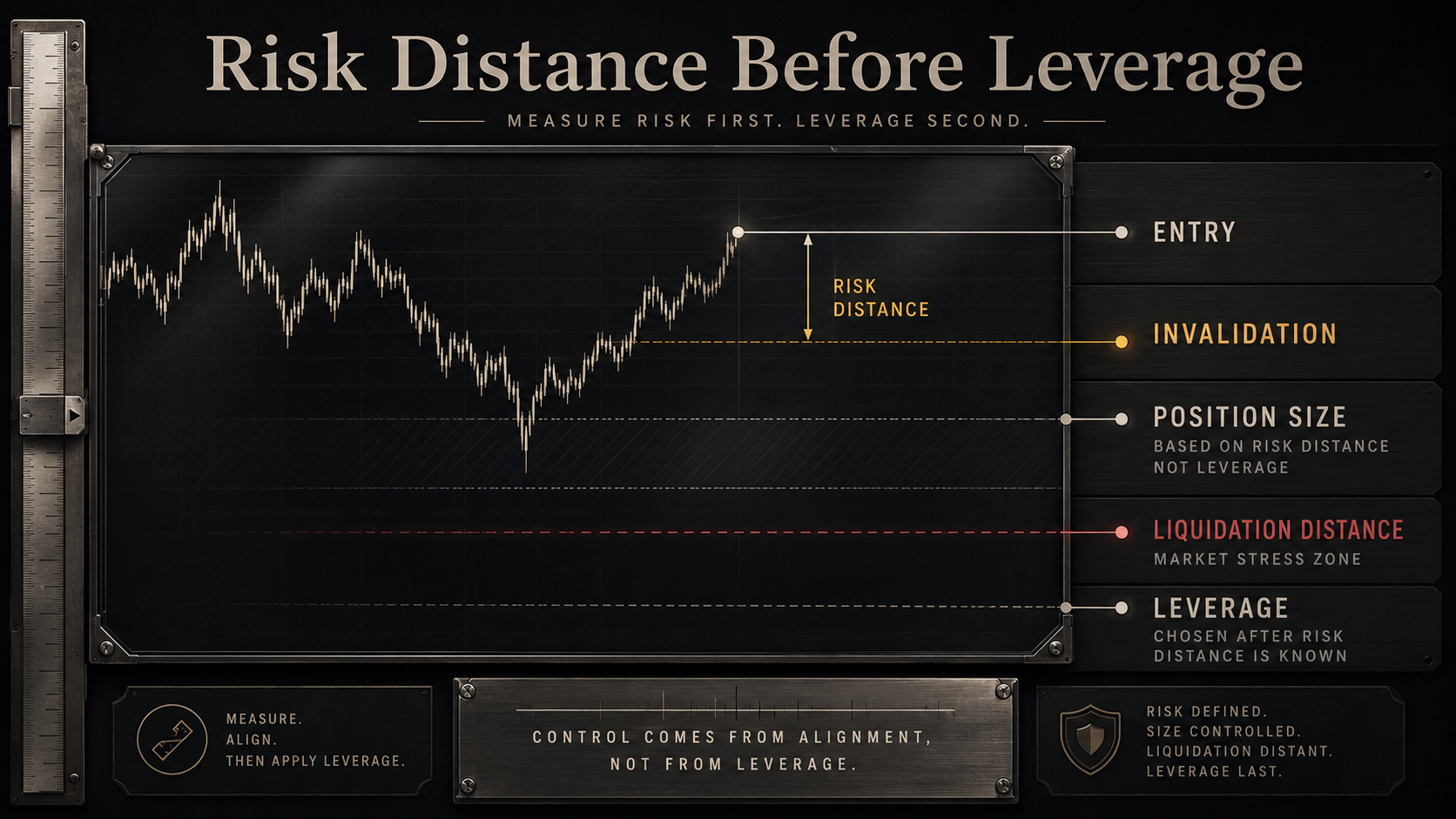
Once invalidation is defined, the trader can measure risk distance.
That risk distance creates position size.
Then leverage can be adjusted around the position.
The order matters.
When leverage is chosen before invalidation, the trade starts with exposure.
When invalidation is chosen before leverage, the trade starts with structure.
Liquidation Distance Reveals the Fragile Trade
Liquidation distance shows how much room the position has before the exchange forces it out.
That distance matters because crypto markets move with noise.
A position may be directionally reasonable but still too fragile if liquidation is close to normal volatility.
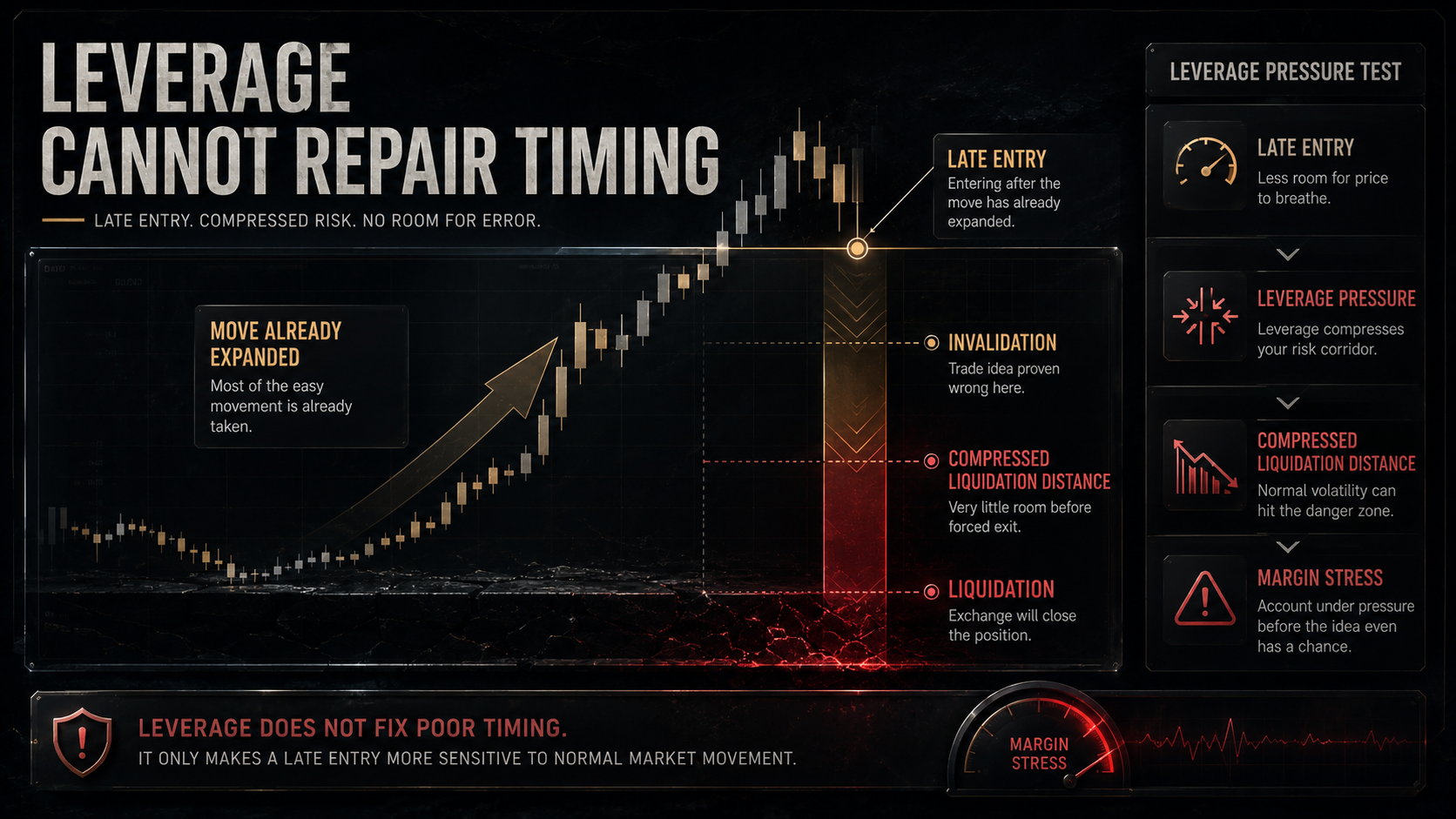
This is common after late entries.
The trader enters after the move already expanded. The invalidation point is farther away. To make the trade feel worthwhile, the trader increases leverage or size. That compresses liquidation distance.
The trade now needs the market to behave perfectly.
A small pullback creates fear.
A normal retest threatens the position.
A temporary wick becomes account pressure.
The setup may not be wrong yet, but the position is already fragile.
Liquidation distance exposes that fragility.
A proper leverage plan keeps liquidation away from ordinary market noise. The trade should be closed because the idea is invalid, not because margin failed first.
When liquidation becomes the real stop, the trader has lost control of the exit.
To understand how leverage losses expand beyond the margin number, read How Much Can You Lose Trading Crypto With Leverage?. That article breaks down how position size, slippage, liquidation distance, and cross margin expose hidden account damage.
The Late Entry Becomes Worse With Leverage
A late entry is already a problem.
Leverage makes it worse.
When a trader enters late, the distance back to the important level is wider. The clean risk area has already passed. Price has less room to continue before it needs to rest, retest, or pull back.
If leverage is added at that point, the trade becomes more fragile.
The market does not need to punish the idea completely.
It only needs to move enough to pressure the leveraged position.
A late entry with spot exposure may be uncomfortable.
A late entry with futures leverage can become emotional quickly.
The trader starts reacting to every candle because the position is too sensitive.
That sensitivity was not created by the market.
It was created by the sizing and leverage decision.
Leverage cannot repair a late entry.
It only magnifies it.
A Better Leverage Sequence
A better leverage decision starts before the platform slider is touched.
The trade should be built in this order:
Structure.
Invalidation.
Maximum risk.
Position size.
Liquidation distance.
Leverage.
This sequence keeps the trade grounded.
Structure gives the trade context.
Invalidation defines where the idea is wrong.
Maximum risk limits account damage.
Position size fits the trade to that risk.
Liquidation distance checks whether the position has enough room.
Leverage is adjusted last.
This order prevents the trader from using leverage as a shortcut for conviction.
A trade that cannot survive the risk filter should be reduced or skipped.
A trade that only looks attractive after adding more leverage is usually not a clean trade.
The goal is not to find the highest leverage that the platform allows.
The goal is to find the exposure that the account can survive if the trade fails.
The Calculator Cannot Save an Undefined Trade
A calculator can expose risk, but it cannot create a valid setup.
If the structure is unclear, the calculator cannot fix it.
If invalidation is missing, the calculator cannot finish the sizing process.
If the trader is trying to recover a loss, the calculator may show the correct number, but the trader still has to obey it.
This is the human part of leverage trading.
The tool gives the boundary.
The trader decides whether to respect it.
A leverage calculator should not be used to justify a trade that already feels risky. It should be used to reject trades that do not fit the account.
If the calculated risk does not work, the answer is not to force more leverage.
The answer is to reduce the size, adjust the plan, or skip the trade.
The Final Rule for Crypto Leverage
Leverage is not the first decision.
It is the last adjustment.
The trader who starts with leverage is building the trade from exposure. The trader who starts with maximum risk is building the trade from control.
A clean-looking setup can still be dangerous if the position size is wrong. A small margin requirement can still hide large exposure. A profitable-looking move can still become fragile if liquidation distance is too close.
A crypto leverage calculator is useful only when it supports the correct order.
Maximum risk first.
Invalidation second.
Position size third.
Liquidation distance fourth.
Leverage last.
If that order is reversed, the trader is not using leverage as a tool.
The trader is using leverage to make an unclear trade feel bigger.
That is where many futures losses begin.